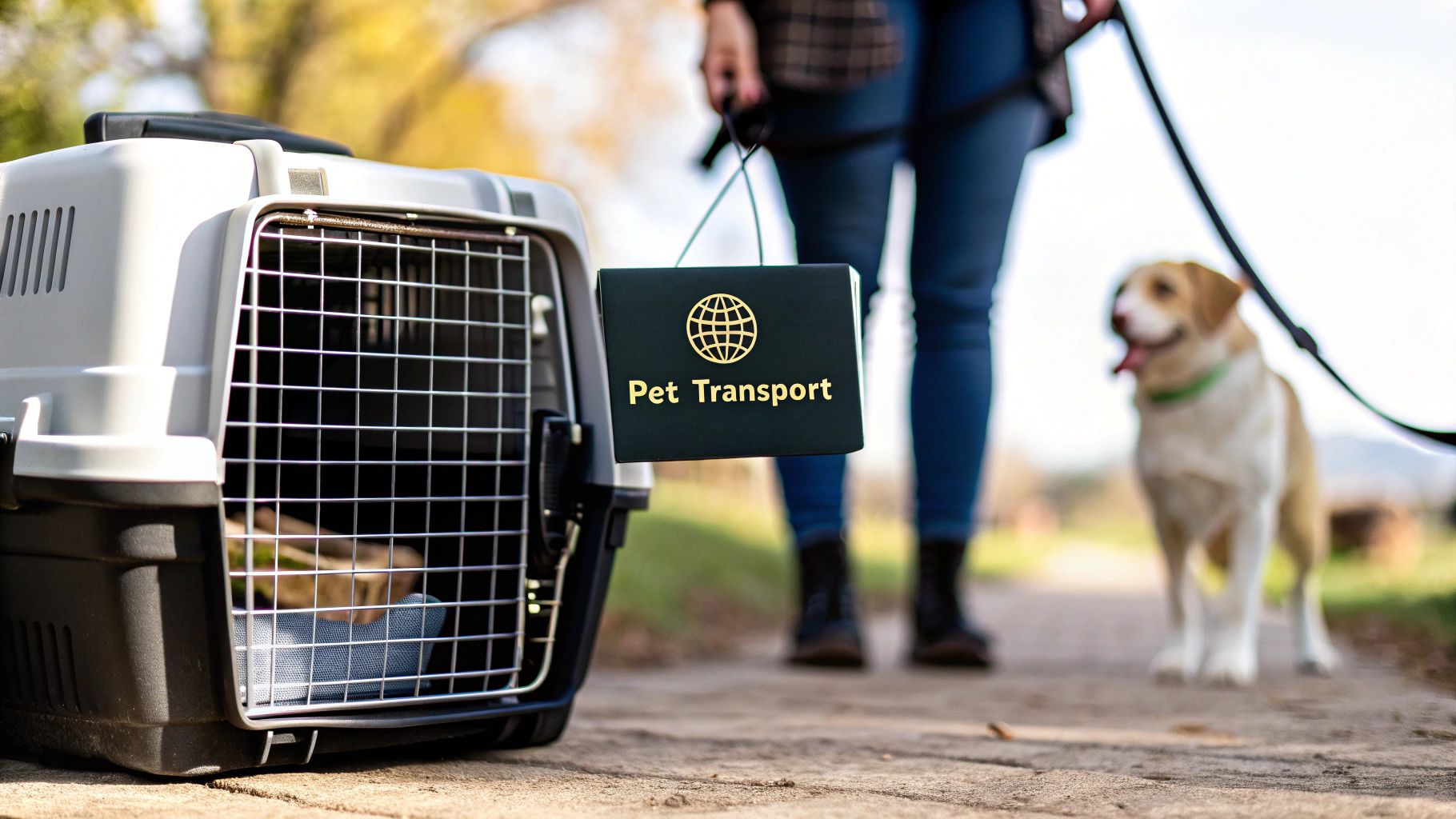
Think of a pet transportation service as a high-end travel agent and logistics expert rolled into one, but exclusively for your furry family member. They take the entire complex, often stressful, process of moving a pet and turn it into a smoothly managed journey. From booking the right flight to handling stacks of paperwork, their job is to make sure your pet travels safely and comfortably, meeting every single airline and country-specific rule along the way.
How Pet Transportation Services Work

Imagine a dedicated project manager whose only project is your pet’s relocation. That’s the best way to understand what these services do. They step in to orchestrate every last detail, taking all the guesswork and logistical headaches off your plate. This is so much more than just buying a ticket; it’s a full-service operation built on deep expertise and meticulous planning.
It all starts with a detailed consultation. A relocation coordinator will talk with you to understand your specific situation—your pet’s breed, size, and health, as well as your destination and timing. This first conversation is key to creating a custom travel plan that puts your pet’s safety and well-being first.
The Logistics Of A Safe Journey
With a plan in place, the service gets to work on the nitty-gritty details. This means booking flights on airlines that are truly pet-friendly, with pressurized, climate-controlled cargo areas where your pet will be safe. If the journey is by road, they use specialized, climate-controlled vehicles and map out routes that include regular stops for potty breaks, meals, and a little TLC.
Here’s a glimpse of what they handle:
- Paperwork, Paperwork, Paperwork: They manage every necessary document, from health certificates and vaccination records to complicated international import permits.
- The Right Crate: They make sure the travel crate is perfectly suited for your pet and meets the strict IATA (International Air Transport Association) standards for size, ventilation, and security.
- Total Coordination: They’re the ones talking to the vets, the airline staff, and the customs officials to ensure a seamless, door-to-door timeline.
Navigating The Maze Of Regulations
One of the biggest reasons to hire a professional is their encyclopedic knowledge of regulations, which seem to change constantly. Every country, and even some states, has its own unique rules about vaccinations, microchips, and quarantine periods. A professional service stays on top of all these requirements, preventing heartbreaking delays or, even worse, your pet being denied entry.
This level of knowledge is the hallmark of any service providing pet transportation with experience and is absolutely critical for a successful move.
As more people move around the world with their pets, the demand for these services has skyrocketed. The market was valued at around USD 573.3 million in 2025 and is expected to climb to nearly USD 873.4 million by 2035. This growth shows just how much trust people put in professionals to get their beloved companions to their new homes safely.
Navigating Domestic vs. International Pet Relocation
Moving your pet across state lines is one thing; moving them across an ocean is an entirely different beast. While both require solid planning, an international move cranks the complexity up to eleven.
Think of it this way: a domestic move is like planning a detailed road trip. An international one? That’s more like orchestrating a diplomatic mission.
Domestic Moves: The Simpler Journey
When you’re moving within the same country, you’re playing by one set of rules. The biggest hurdles are usually just making sure your pet is healthy enough for the trip and has an airline-approved travel crate. You’ll almost always need a recent health certificate from your vet, but the paperwork is typically straightforward.
The graphic below highlights some of the key differences you’ll find when planning a move.

As you can see, local moves are quicker and cost less per mile. But for those big, complex journeys, especially international ones, a full-service approach is what gets the job done right.
The Intricacies Of International Moves
International pet travel throws a whole maze of regulations at you, and they can change dramatically from one country to the next. This is precisely where professional pet transportation services become less of a luxury and more of a necessity.
Every country has its own rulebook. You have to follow it to the letter, or you risk heartbreaking delays, unexpected quarantine, or even being denied entry altogether.
Some of the common requirements you’ll run into include:
- Import Permits: Many countries won’t even let your pet on a plane without an official permit you have to apply for in advance.
- Specific Vaccinations: It’s not just about the standard shots. Some nations require specific vaccines or blood tests, like a rabies titer test, which has to be done months before you travel.
- Microchip Standards: An ISO-compliant microchip is the global standard, and it has to be implanted before the rabies vaccine is given. The timing is critical.
- Customs Clearance: When your pet lands, they have to be cleared through customs. This involves a mountain of paperwork that has to be absolutely perfect.
The biggest mistake I see pet owners make is underestimating the timeline. You can’t plan an international move in a few weeks. It often takes a 3-6 month head start to get all the veterinary and administrative ducks in a row.
To give you a clearer picture, here’s a quick comparison of what to expect.
Domestic vs. International Pet Travel Requirements at a Glance
| Requirement | Domestic Travel | International Travel |
|---|---|---|
| Health Certificate | Required (often within 10 days of travel) | Required (with specific timelines and often government endorsement) |
| Vaccinations | Standard vaccinations (e.g., rabies) must be current. | Must be current, plus possible extras like rabies titer tests. |
| Microchip | Recommended but not always mandatory. | Almost always mandatory (ISO-compliant chip required). |
| Import Permit | Not required. | Often required; application process can take weeks or months. |
| Quarantine | Not required. | May be mandatory depending on the country (e.g., Australia, NZ). |
| Customs | Not applicable. | Required; involves specific forms and potential inspections. |
As the table shows, the level of documentation and the strictness of the rules jump significantly once you cross a border.
Quarantine And Country-Specific Protocols
That word—quarantine—is enough to make any pet owner nervous. Certain countries, especially island nations like Australia and New Zealand, enforce strict, mandatory quarantine periods to protect their local ecosystems. A professional relocation service knows exactly how to book these government facilities and ensures all your pre-travel vet work is done perfectly to keep your pet’s stay as short as possible.
Failing to meet these exacting standards can have serious consequences. To get a real sense of what’s involved in a smooth trip abroad, it helps to understand the specifics of international pet relocation from people who navigate this process every day. Whether you’re headed to Japan or Germany, the rules are non-negotiable, and having an expert in your corner is the surest way to a safe and successful journey for your beloved pet.
Decoding the Costs of Transporting Your Pet

Trying to nail down the price of a professional pet move is a bit like getting a quote for a custom-built piece of furniture—it’s never a one-size-fits-all number. The final cost is a tapestry woven from dozens of little details, all centered around your pet and the journey ahead.
A quick trip for a tiny cat across state lines is going to look a lot different on paper than moving a Great Dane to another continent. The price you see reflects the immense care, planning, and expertise needed to get them there safely, not just a simple delivery charge.
Key Factors Shaping Your Quote
So, what actually goes into that final number? It really boils down to a few core building blocks that determine how complex the move is and what resources we’ll need. The biggest pieces of the puzzle are almost always your pet’s size, the distance they’re traveling, and how they’re getting there.
These three things have the most direct impact on your estimate:
- Pet Size and Weight: When flying, airlines charge for space, not just weight. This means the total size of the travel crate is a huge factor. A bigger, heavier pet needs a much larger crate, which translates directly to a higher airfare.
- Travel Distance: Whether it’s a 500-mile drive or a 5,000-mile flight across the ocean, distance is a major cost driver. Longer trips mean more fuel, more time for our handlers, and sometimes, overnight layovers.
- Mode of Transport: For shorter domestic moves, ground transport is often the more budget-friendly choice. But for long-distance or international journeys, air travel is the only practical option, and it comes with higher baseline costs.
The Higher Price of International Moves
Once you start crossing international borders, the game changes completely. The logistics get far more complicated, and the costs naturally follow suit. An international move is so much more than just a plane ticket—it’s about navigating a maze of government regulations, fees, and specialized paperwork that simply doesn’t exist for domestic travel.
An international relocation quote includes fees that are often non-negotiable and set by governments and airlines. These can include customs clearance fees, import taxes, government endorsements for health certificates, and potential quarantine costs, which can add hundreds or even thousands to the final price.
Some of those extra international expenses include:
- Customs and Brokerage Fees: Every pet entering a new country has to be officially cleared through customs, which requires a licensed broker to handle the process.
- Government Endorsements: Those official-looking health certificates often need a stamp of approval from a government body like the USDA, and that comes with a fee.
- Quarantine Stays: If the destination country requires a quarantine period, you’ll be covering the cost of your pet’s stay in a government-approved facility.
The only way to really know what your pet’s specific journey will cost is to talk it through with an expert. To get a handle on your budget, you can easily request an estimate to move your pet and get a detailed breakdown. That way, you’ll see exactly where every dollar is going—right back into your pet’s safety and well-being.
Choosing the Right Pet Transportation Partner
Let’s be honest, handing your pet over to a stranger for a long trip is a huge deal. It’s a massive leap of faith. You’re not just moving a pet; you’re entrusting a family member to someone else’s care. Finding the right company can make all the difference, turning a nail-biting experience into a smooth, safe journey that gives you peace of mind.
This isn’t a decision to be made lightly with a quick Google search. You have to put on your detective hat and really dig into a company’s background, their reputation, and how they actually operate. A flashy website doesn’t mean a thing if their safety standards and animal care aren’t top-notch.
Verify Their Credentials and Affiliations
First things first, check their professional credentials. These aren’t just logos to slap on a website; they show a real commitment to high standards and ethical practices in the industry. The big one you absolutely want to see is a membership with the International Pet and Animal Transportation Association (IPATA).
IPATA members are the real deal—they’re held to a higher standard for humane animal handling and professionalism. Beyond that, make sure the company is USDA licensed and fully insured. This is your baseline, a non-negotiable that guarantees a level of accountability and protection for your furry friend while they’re on the move.
Dig Deep into Reviews and References
Once you’ve confirmed they’re properly credentialed, it’s time to find out what other pet parents are saying. Hunt down recent, detailed reviews on sites that aren’t controlled by the company itself. A couple of grumpy reviews are normal for any business, but you need to look for patterns. Are multiple people complaining about the same thing, like terrible communication or constant delays?
And don’t hesitate to ask for references. See if they can connect you with recent clients who had a similar move—maybe the same destination or even the same breed of pet. Nothing beats hearing directly from someone who has been through the process with them. It gives you a level of insight a polished website testimonial just can’t.
Pro Tip: Keep an eye out for reviews that mention staff by name or describe how the team handled a curveball. Those little details often tell you everything you need to know about their real-world customer service and how they act under pressure.
A Checklist of Critical Questions to Ask
Before you sign anything, get your list of questions ready. How they answer—or don’t answer—will speak volumes about their expertise and whether they’re being straight with you.
Here are some must-ask questions:
- Experience: “How many pets have you actually moved to [your destination]?” and “Do you have specific experience with my pet’s breed?”
- Contingency Plans: “What happens if there’s an emergency? What’s your protocol if my pet gets sick or a flight is canceled?”
- Communication: “How will I get updates during the trip? Will I get pictures? Is there any kind of tracking?”
- Safety Protocols: “How do you make sure the cargo hold or vehicle is climate-controlled? What’s the plan for food, water, and potty breaks?”
Your number one priority is making sure they follow safe dog transport practices. A truly professional service won’t just tolerate these questions; they’ll welcome them and give you clear, confident answers. Their response is a direct window into the kind of care your pet is going to receive.
How to Prepare Your Pet for a Calm Journey

A smooth trip for your pet doesn’t just happen on travel day. The real work begins weeks, sometimes even months, beforehand. Your preparation is the key to turning a potentially scary experience into a calm and positive one. The goal is simple: make the unknown feel familiar.
It all starts with the travel crate. Too often, a crate is a scary box that only comes out for a trip to the vet. We need to flip that script and turn it into their own personal safe space. Just place it in your living room with the door wide open, and toss in some cozy bedding and their favorite toys.
Building Crate Confidence
Let your pet explore the crate on their own time. Start feeding them their meals inside or dropping high-value treats in there for them to discover. Once they’re comfortable going in and out, you can start closing the door for just a few seconds, then a few minutes, always praising them for being calm. You’re building a new, positive memory: this crate is a good place.
When they see it as their den, you can pack a little travel kit with familiar things. A favorite blanket or an old t-shirt that smells like you can work wonders for calming their nerves. It’s a small piece of home they can take with them when they travel with a pet transportation service.
Health, Hydration, and Calming Protocols
A pre-travel check-up with your vet is an absolute must. This is where you confirm your pet is fit for the journey and get all the necessary paperwork, like health certificates, squared away. It’s also the perfect time to chat about their feeding schedule. Most of us in the business recommend a light meal 4-6 hours before they travel to avoid an upset stomach, but they should always have access to water.
One of the most important things to discuss with your vet is sedation. It might seem like a quick fix for an anxious pet, but it’s something we strongly advise against.
Veterinarians and professional transporters will tell you that sedatives are a bad idea. They can mess with a pet’s ability to control their body temperature and keep their balance, which is especially dangerous during air travel. A calm pet is always, always safer than a sedated one.
Instead of reaching for medication, stick to natural calming methods. Getting your pet comfortable with their crate and giving them familiar scents to snuggle with are far safer and more effective ways to ensure they have a peaceful trip.
The Real Reason Pet Transportation Is Booming
Ever wonder why professional pet transport has suddenly become so popular? It all comes down to a massive cultural shift you’ve probably noticed yourself: we’ve started treating our pets like members of the family. This idea, often called pet humanization, is the single biggest reason the demand for specialized pet transportation services is skyrocketing.
Today’s pet owners don’t just see a dog or a cat; they see a furry child, a best friend, a companion who deserves the absolute best. So, when it’s time to move, the thought of just “shipping” them like a piece of furniture feels wrong. People are actively looking for a solution that honors that deep emotional bond, ensuring their loved one is safe and comfortable.
The New Standard for Pet Care
This “pet parent” mindset is changing everything. Owners aren’t just looking for a basic ride anymore; they expect a premium experience that puts their pet’s well-being—and their own peace of mind—first. What used to be considered a luxury is quickly becoming the standard.
Think about it. We’re now seeing features like:
- Climate-controlled vehicles so our pets are never too hot or too cold.
- Real-time GPS tracking to watch their journey every step of the way.
- Constant photo and video updates from the handlers taking care of them.
Even for shorter trips in the car, safety is top of mind. Many owners now invest in things like appropriate dog car seats to keep their companions secure.
The “pet parent” mentality has completely reshaped the market. People are willing to invest more to guarantee a compassionate, professional, and transparent experience, validating their decision to choose a dedicated service over a riskier, DIY approach.
The numbers don’t lie. The global pet travel services market was valued at around USD 2.23 billion in 2025 and is expected to hit USD 3.95 billion by 2032. That’s not just a trend; it’s a clear signal that we’re more committed than ever to our pets’ happiness and safety. You can dive deeper into the expanding pet travel market on grandviewresearch.com.
Answering Your Pet Travel Questions
It’s completely normal to have a ton of questions when you’re planning a move for your pet. This is a huge deal for them (and for you!), so let’s clear up some of the most common concerns we hear from pet parents.
Is It Really Safe for My Pet to Fly?
Absolutely. When you work with a professional, flying is a very safe way for your pet to travel. The pet transportation services you can trust only partner with airlines that have specific, dedicated programs for handling live animals.
This means your furry friend isn’t just another piece of luggage; they’re in a special part of the cargo hold that’s both pressurized and climate-controlled, keeping them safe and comfortable. The pros handle everything to keep stress low and make sure the travel crate is up to all IATA safety codes.
Should I Give My Pet a Sedative Before the Flight?
We get this question a lot, and the answer is a firm no. Vets and professional transporters will tell you the same thing: do not sedate your pet for a flight. Sedatives can mess with their breathing at high altitudes and make it hard for them to keep their balance. The changes in cabin pressure can make the drug’s effects unpredictable and dangerous.
The best thing you can do is get your pet used to their travel crate long before the trip. Making the crate a familiar, safe space is a natural way to reduce their anxiety, and it avoids all the health risks that come with sedation.
How Early Do I Need to Book Everything?
The sooner, the better, especially if you’re moving to another country. Here’s a good rule of thumb for your timeline:
- Moving Internationally: You’ll want to start the process 3-6 months before your move. Trust us, you’ll need that time for all the paperwork—vaccinations, microchips, import permits, and more.
- Moving Domestically: For moves within the country, booking 4-6 weeks out is usually plenty of time. This gives you a comfortable window to get vet check-ups done and sort out the travel details without scrambling at the last minute.
Getting a head start with your transport service makes the whole thing smoother and less stressful for everyone involved.
At Precious Pets Transport, we’re ready to answer all your questions and make sure your pet’s trip is handled with the care they deserve. Find out more about how we can help at https://preciouspetstransport.com.